Comprehending Lab Testing With Clear Coa Basics
Coa
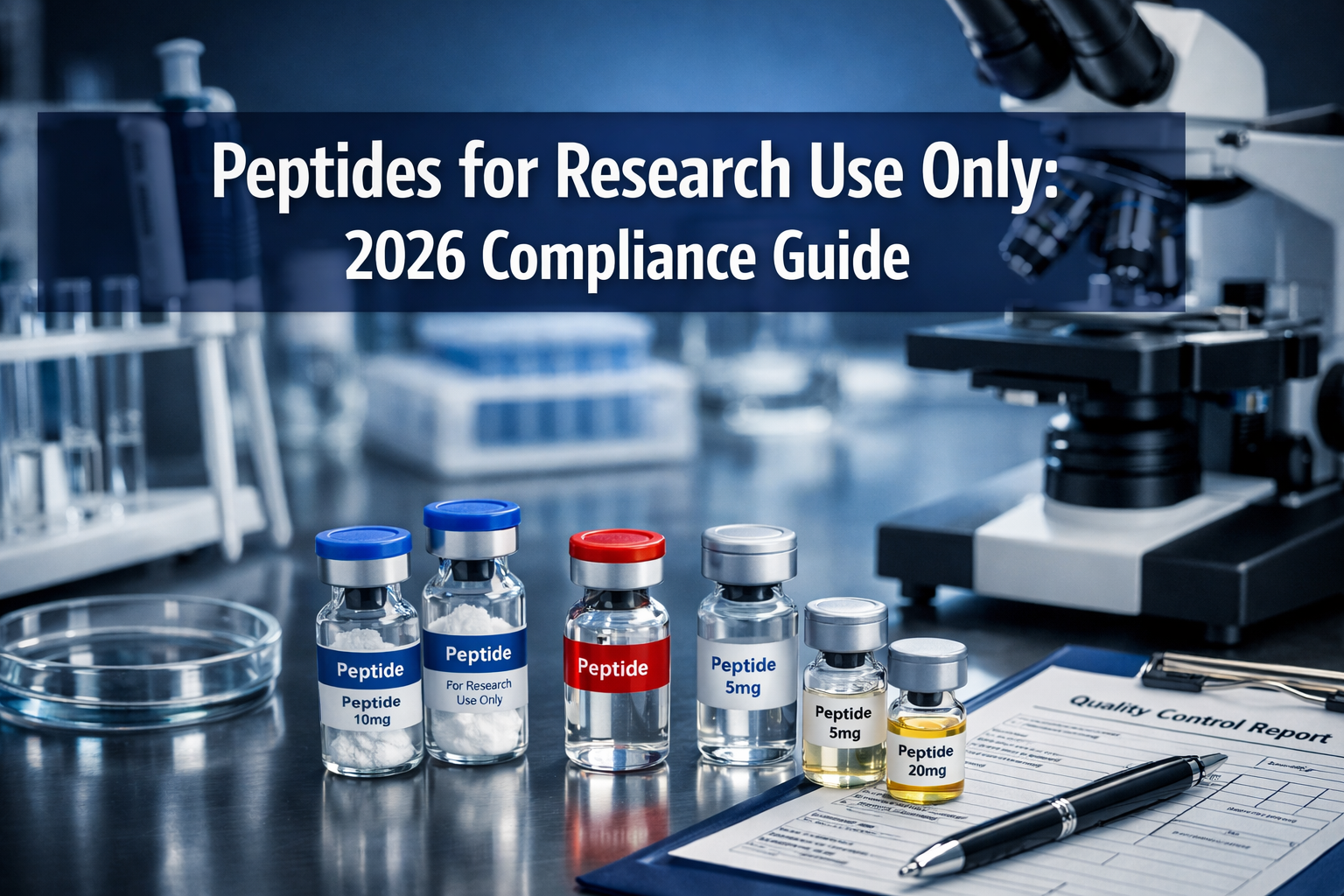
Genuine testing generates detailed paperwork; careful noninclusion of standard parameters shows CJC-1295 DAC feasible top quality concerns being concealed. Contrast COA format and content across several sets from the very same provider. Regular formatting suggests well-known quality control procedures, while considerable variations in between files might show fabrication.
- As sets are made, samples are sent out via laboratory screening to gather data.
- It is essential to understand that a COA is only valuable when it is complete, readable, and linked to the exact item being marketed.
- The crucial question is whether the record offers sufficient clearness and traceability for purchasers to assess it with self-confidence.
- As the compounds leave the column, detectors gauge the existence of each element.
- She holds a BSc in Genes and a Master's in Public Health (MILES PER HOUR), with a concentrate on mitochondrial science, metabolic wellness, and healthy aging.

Usual Concerns Concerning Reviewing A Coa
In research laboratory research environments, logical paperwork helps confirm the identification and quality of speculative materials. A Certificate of Evaluation is a research laboratory report that provides analytical information regarding a particular batch of a substance. These results help researchers figure out whether a substance meets defined peptide top quality criteria before it is used in controlled speculative settings. A peptide certification of analysis (COA) is a lab record that reports analytical testing results for a certain batch of a peptide research study substance.
What Our Coas Consist Of
Larger inconsistencies (or results reported just at the ± 0.1% degree) recommend potential identification issues, instrument restrictions, or deterioration calling for additional examination or supplier contact. Browse accreditation databases kept by organizations like A2LA, ILAC, or local matchings. Call the research laboratory straight using separately gotten call details to confirm they performed the mentioned screening.
Customers need to additionally review item labeling, site transparency, storage details, and the consistency of paperwork throughout the vendor's catalog. The strongest sourcing decisions typically originate from checking out the full documents picture rather than one file alone. Equally as importantly, a COA needs to be viewed as one part of a wider documentation image.Yes, small variant in pureness can take place between sets and between various analytical tests. Peptides are usually evaluated making use of HPLC (High Efficiency Fluid Chromatography), which determines pureness based on chromatographic peak location under particular problems. If you are trying to find research-grade peptides with clear, batch-specific documents, Helpful resources Peptides Skin provides item transparency developed to support more enlightened sourcing choices. Purchasers can evaluate available product info, including COA-related paperwork, directly with our directory prior to putting an order. Therefore, many buyers see HPLC and LC-MS with each other as a stronger paperwork mix than either technique alone.A peptide certificate of evaluation is a logical record created by a laboratory after a substance has undergone testing. The document summarizes the results of laboratory evaluation carried out on a certain set of a peptide research substance. HPLC can give helpful purity-related info, but it does not constantly completely verify peptide identification on its own. That is why customers frequently look for additional supporting techniques, such as LC-MS, when examining peptide documentation.
This documentation sustains reproducibility and traceability, 2 principles that are basic in clinical work. HPLC is commonly utilized to assist define the purity account of an example by dividing detectable elements and showing the family member dimension of the major height. LC-MS adds mass-based details that can help sustain identity-related evaluation by showing whether the spotted compound follows the expected molecular weight.Instance design of a peptide certificate of analysis made use of to document analytical testing results for research compounds. DN Lab Research prioritises third-party screening as part of its top quality structure. Every peptide batch is sustained by analytical documentation that shows clear, reproducible testing criteria which is readily available upon demand.
Under no conditions should these peptides be utilized for any purpose apart from research study. Statements made on this website have not been examined by the United States Food and Drug Administration. If there's a freeze or lengthy delivery delay, the compound may not function similarly.